Silly question, but what is a mixed zone? Thibaut Courtois talks about it on Onda Cero, a Spanish outlet, and I read his words on Walfoot (a Belgian football site) on the 7.32 train. He looks back on the 2018 World Cup semi-final: France won 1-0, with a header from Samuel Umtiti in the 51st minute. Belgium were managed by Roberto Martinez.
After the match, he had criticised the way the French played, in front of the press. That is where the “Belgian seum” (French slang for sulking bitterness) came from. I have opened a “seum” tab in my notebook. It is empty for now, but it has a colour.
Today he says: “I went to talk to the press and it happened to be the French press. I was very angry, I talked about anti-football and even today, they joke about it in France.”
He also explains: “It’s normal. You’re leading 1-0 in a World Cup semi-final, of course you’re going to do everything to run down the clock. But with the frustration of losing a semi-final, and I was also 26 at the time, you arrive in the mixed zone still very angry.”
So I have two questions. One: running down the clock. Doesn’t the clock run on its own? I checked, and actually in football it does, but then time is added at the end and nobody knows how much. In basketball the clock stops, I looked. Nobody has to run it down.
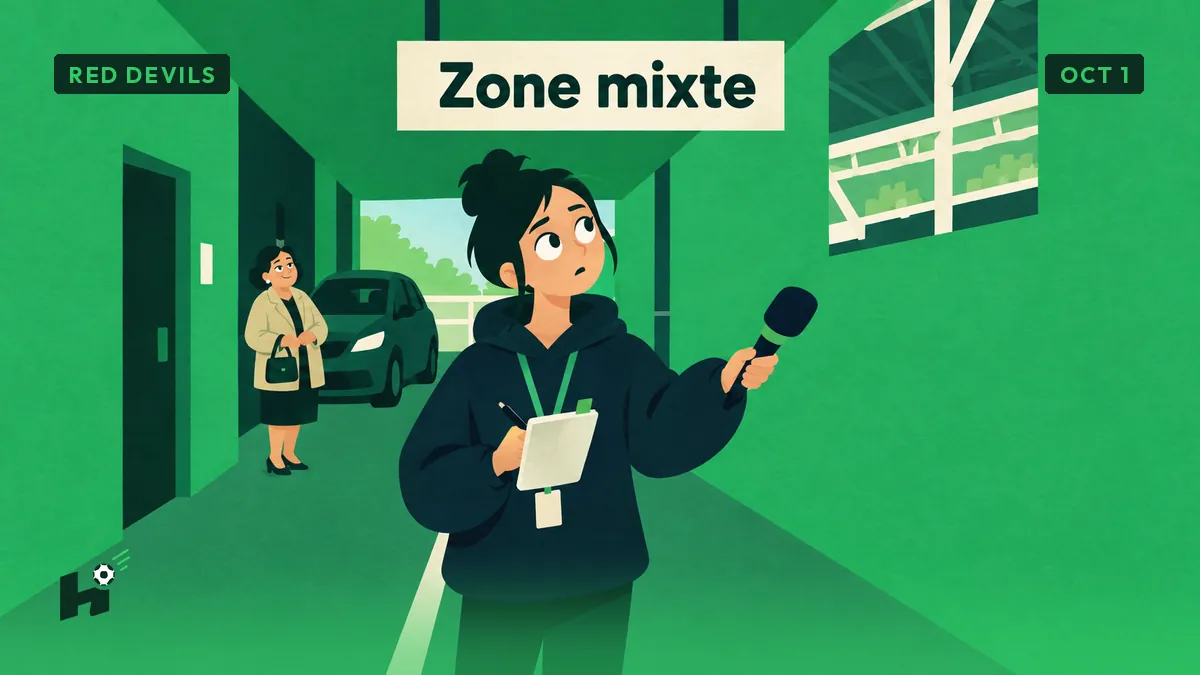
Two: the mixed zone. I’m told it’s the corridor where players meet journalists right after the match. Right after. Still sweating, still in the 90th minute in their heads. I’m told it’s always been like this, fine, but what does that mean?
At our place, the mixed zone is the car park. And the journalist is the mother-in-law.
What I like is the end of the interview. Courtois says: “I think you have to be self-critical first.” He says he tries to say things as they are. Eight years later, he has therefore done his own mixed zone, on Onda Cero. Anyway, I still have a lot to learn.
It’s true, we checked: Walfoot.