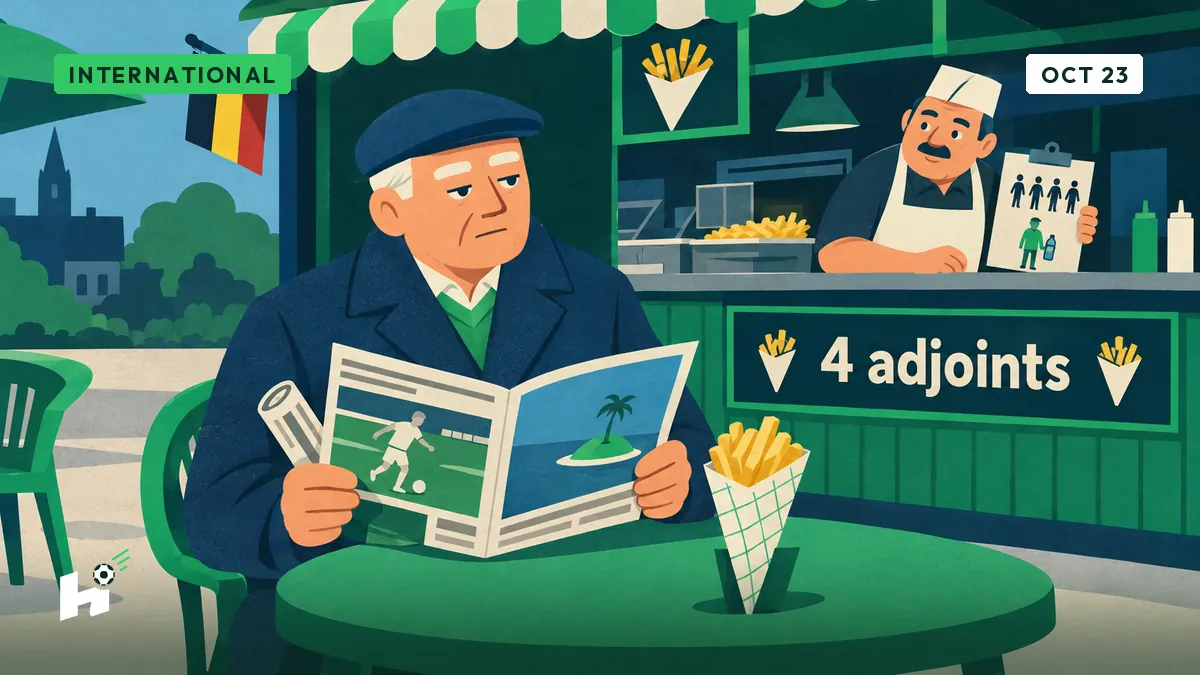
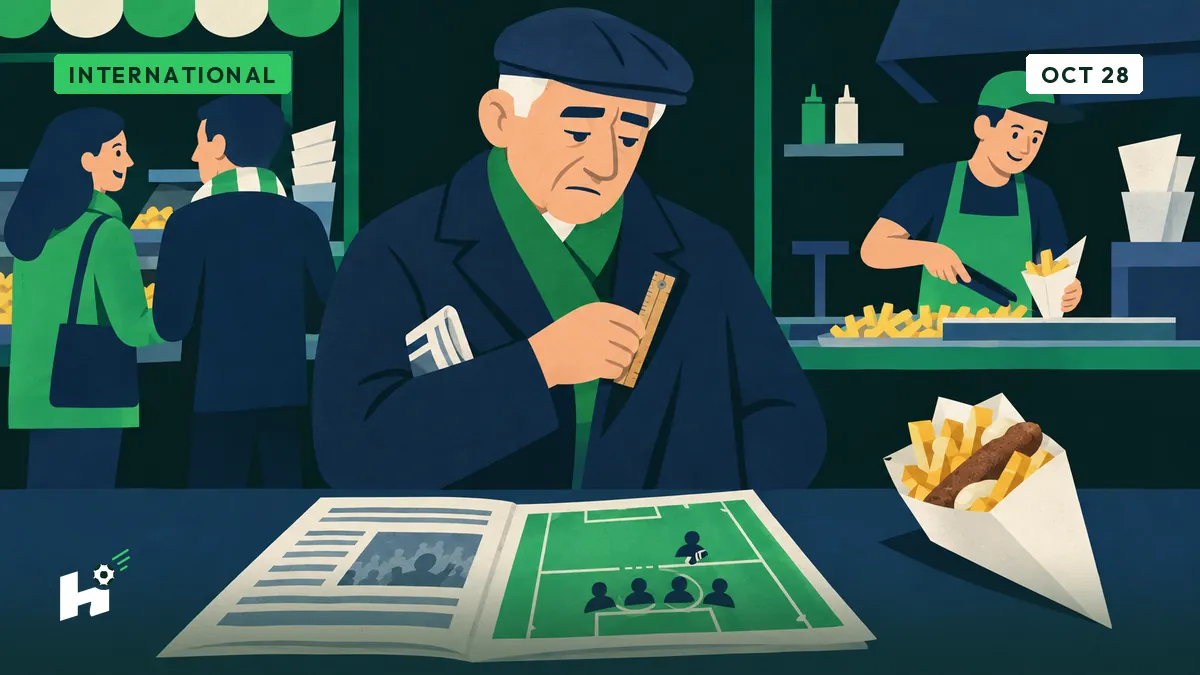
The Ifab will probably not extend Arsène Wenger’s “daylight” offside trial. Its football and technical committees did not find enough support on Tuesday. I read it at the chip shop, in my weekly paper, between two fricadelles (Belgian sausages).
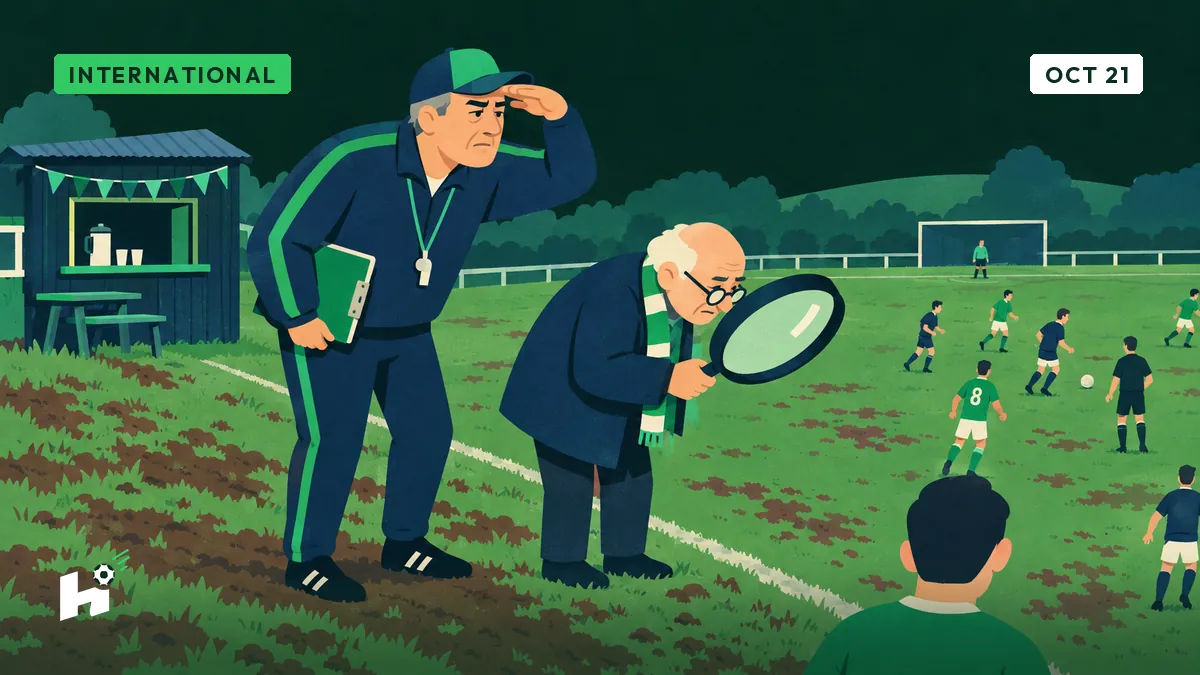
The principle was simple. A player is onside if any part of his body is level with the second-last opponent. Any part. A knee. A heel. A shoulder. We had ended up judging a striker by the piece.
In 1980, that would never have happened. I never needed to know which toe had gone past. I was none the worse for it.
The trial ran all year in the Canadian Premier League. Result: 54% fewer offside decisions, 13 more goals over 112 matches, and a defensive line that dropped back three metres. Three metres. I’m not criticising. I’m comparing. In my day, a defence dropped back when the centre-back had a sore back, and nobody measured it.
The same league was also testing Football Video Support, a VAR where the manager can challenge two decisions a match. It limited the effect of the trial, the BBC says. One innovation holding back another. There is a kind of justice in that.
The committees also looked at penalty shootouts. The captain who wins the toss would choose the end or the first kick, and the other would get the rest automatically. That idea has support. Now they are reforming the coin.
Note that I’m not against progress. I’m against this progress. Apparently, so is the Ifab.
A line that drops back three metres, I call that pitch 2. It slides down all by itself, with the slope.
These meetings are only a first step towards possible changes to the laws of the game for 2027-28. Well. It’s the times.
It’s true, we checked: BBC Sport.