
Tactically, Roland Duchâtelet is right on one point: you need data. The former Standard Liège chairman, 79, gave his view on VAR to Sudinfo, and I read it on Walfoot on Monday evening, the folder of team sheets still open on the kitchen table. He sees a lot of positives in VAR. He thinks it has improved the standard of refereeing. And he goes further.
“In 10 years at most, VAR will be run by AI. Obviously, it will need some development, but you can easily imagine a database of different phases of play that the AI could use to compare with a given situation and suggest the decision to make,” he said.
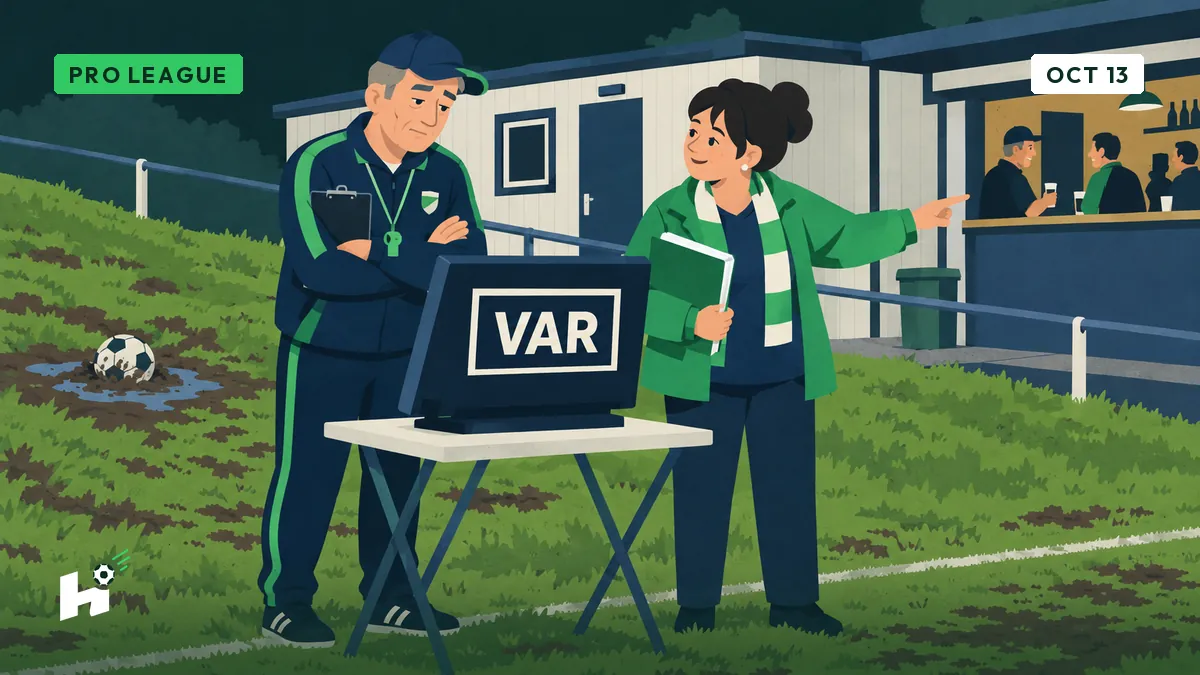
A database of game phases. I’ve got one. Her name is Josiane, she’s been the club delegate since before I arrived, and she remembers every disputed offside on our pitch 2 since the slope has existed. When there’s a doubt, we turn to her. She compares with a given situation. She suggests the decision to make. Often, the decision is to head to the clubhouse bar.
The problem for the AI will be the pitch. A phase of play in the Pro League (Belgium’s top flight), on a flat surface, doesn’t compare with a phase on a slope, into the wind, with a ball that has taken in water. You’ll need two databases. A flat pitch away, mind you.
Duchâtelet also says technical errors are still too frequent, and the debate comes back every weekend in the Pro League. On Sunday, Standard felt aggrieved not to get a late penalty against Charleroi. At our level, that kind of ending gets settled differently: the delegate has forgotten the cards, and everybody goes home.
Silly question, but if the AI suggests the decision, who makes it? I’ve noted that down in the ‘VAR’ tab.
He also applauded with both hands the rules used at the last World Cup to clamp down on divers. That one I sign up to. My right back goes down the moment he sees an opponent. Josiane has had him in her database since 2019.
It’s true, we checked: Walfoot.