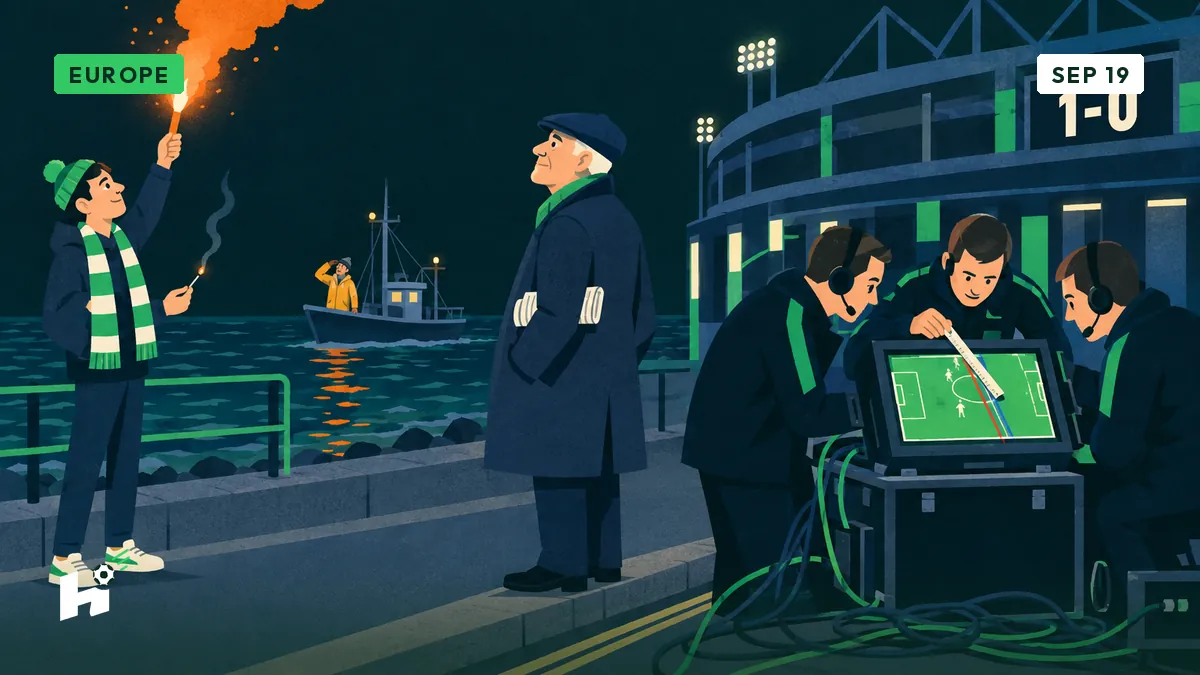
The flag went up. The goal was gone. Then the video assistant had a look, and the goal existed again. Bournemouth led 1-0 in San Sebastián, from an Adrien Truffert cross set up by Evanilson.
Out in the street, a supporter, Juan Iturralde, stepped outside at 21.41 to fire a distress flare. One flare: that is the Anoeta code, one for the visitors, two for the home side, so that sailors out at sea know the score. The tradition comes from the old ground, Atotxa. It survived the move.
Two ways of announcing a goal. One takes a minute, a screen and three opinions. The other takes a match. Note that I’m not against progress. I’m against this progress. VAR isn’t progress, it’s a confession: we no longer trust the man with the flag, so we ask the sea to confirm. Well. It’s the times.
Rayan made it two on 20 minutes, heading in a long ball lofted forward by Alex Scott. Sergio Gómez pulled one back on 57, a curled cross that ended up in the far side netting. Two flares for that one. The sailor got the full information, with no replay and no line drawn on a screen.
Silly question, but if the goal is disallowed first and given afterwards, when do you fire the flare? And if the video had cancelled it, can you call the flare back?
There were 2,000 English supporters in the stands, for a first European match that took 127 years to arrive. The Bournemouth head coach, Andoni Iraola, is from San Sebastián, the city where he started out. Djordje Petrovic kept it at 2-1 with two saves from Orri Óskarsson in the closing minutes, one of them from five metres in the final minute. No screen was consulted for those.
It’s true, we checked: The Guardian.