
Silly question, but when you give a shirt back, who do you give it back to?
Cristiano Ronaldo announced his international retirement on 5 November, in a video posted on Instagram among other platforms. I was on the 7:32 train, notebook open, tab marked “expressions”. He said: “The day has come for me to give back the number 7 shirt of our national team.” Walfoot, the Belgian football site, reports it. He wore it for 23 years.
Giving something back, in English as in French, implies a counter. A library, a bike hire, a cloakroom. I asked the newsroom whether the Portuguese federation has a shirt return desk. They looked at me for a long time.
In the English version quoted by the BBC, he says the time has come to “pass it on to the future”. So he is giving it back to the future. That is even less of an address.
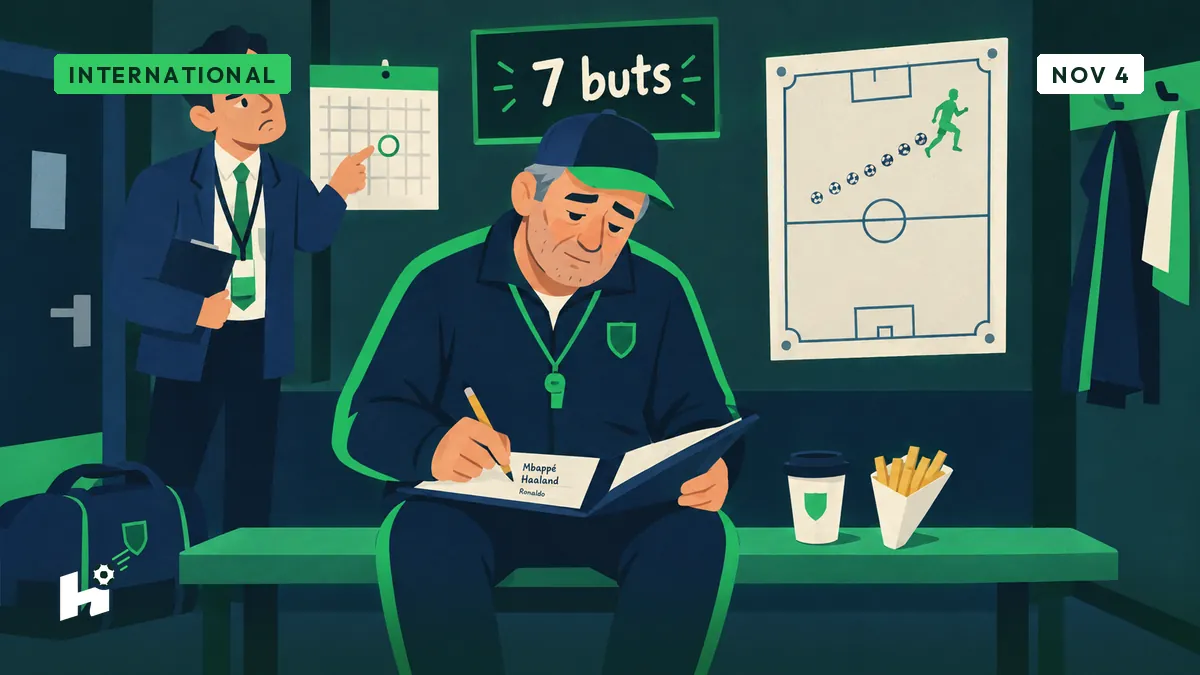
I also noted the numbers, because there, at least, we know how to count: 234 caps, 146 goals since 2003. World records according to the BBC. According to Walfoot, no male footballer has more appearances or goals for his country. He won Euro 2016 and two Nations Leagues, in 2019 and 2025. He plays for Al-Nassr.
In basketball, when someone has worn a number for a very long time, it goes up into the rafters. I checked. The shirt doesn’t leave, it stays up there, everyone can see it. Here, I asked what happens to the 7 once it has been handed back. I checked, and actually nobody knows.
In 1980, you handed the shirt back at the end of the match. To the club delegate. He counted them.
He added that it was not an easy decision, because some decisions “are not made with the mind alone – they are also made with the heart.” That I underlined twice. For the shirt, I opened a tab: “Where the 7 goes”. It is empty.
Anyway, I still have a lot to learn.
It’s true, we checked: Walfoot.