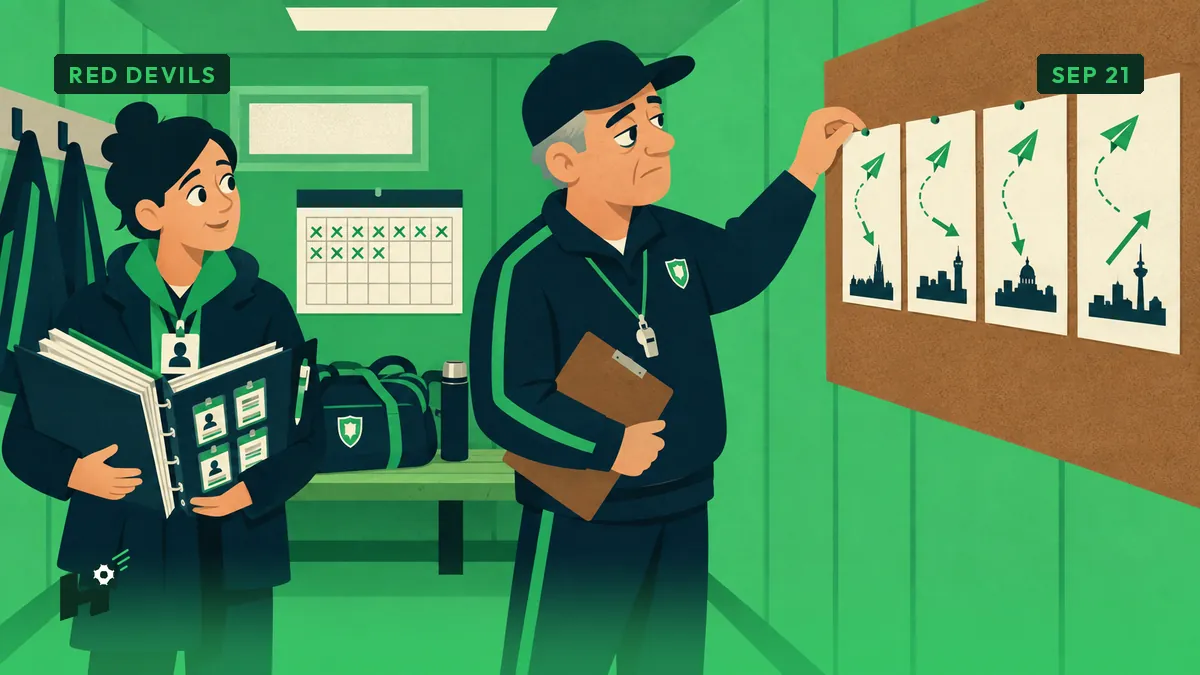
Rome, Paris, Brussels, Liège. Eleven days, four games, all of them in group 1 of Nations League A, where Belgium have six to play in total.
Outside a major tournament, this hadn’t happened since June 2022. The reason is administrative: in March 2023 the FIFA Council approved a new international match calendar. September and October, nine days each, become one single sixteen-day window, with four games allowed instead of two. November, March and June stay as they were.
And this is not a one-off. From 2026 until 2030 at the very least, that merged window is the new normal, which means a first camp in charge is now a small tournament in its own right, minus the trophy at the end of it.
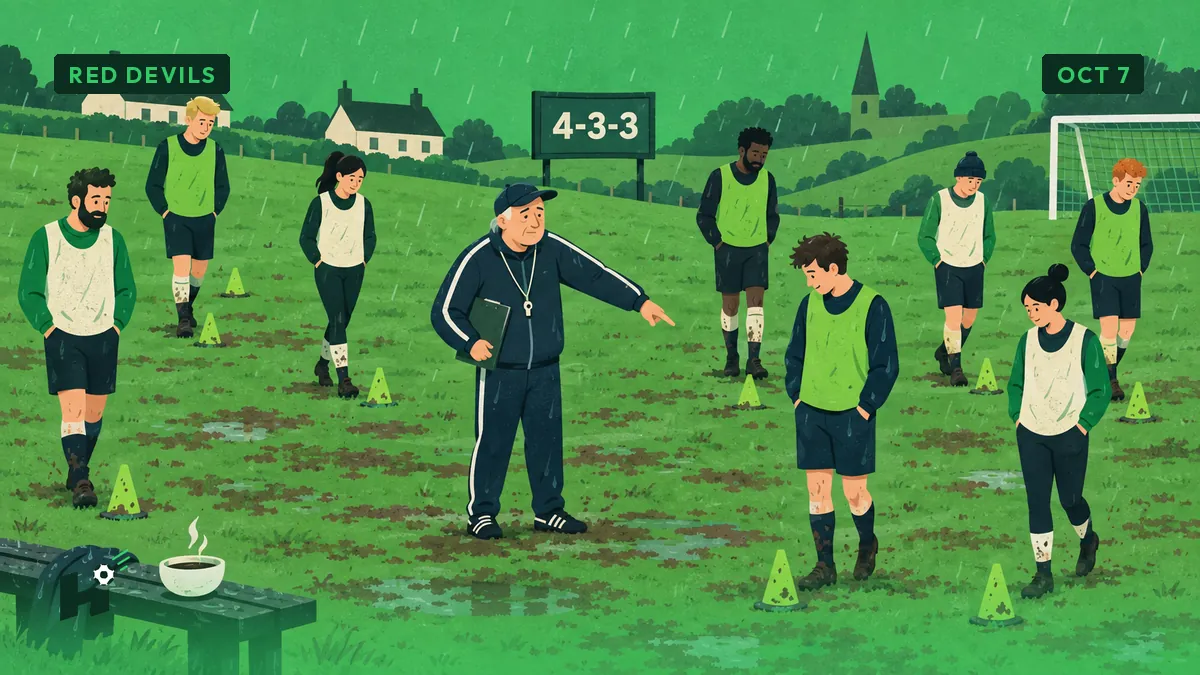
Tactically, four games in eleven days isn’t something you handle with eleven players, you handle it with twenty. I know all about it: play-off week, I had a game on the Wednesday and one on the Sunday, and I made my five changes, two of them so the lads could pick up the kids at five. He’s got a plane, a hotel and a physio. A flat pitch away, mind you, it’s the same job. I run that on Tuesday. When we’ve got eleven, that is.
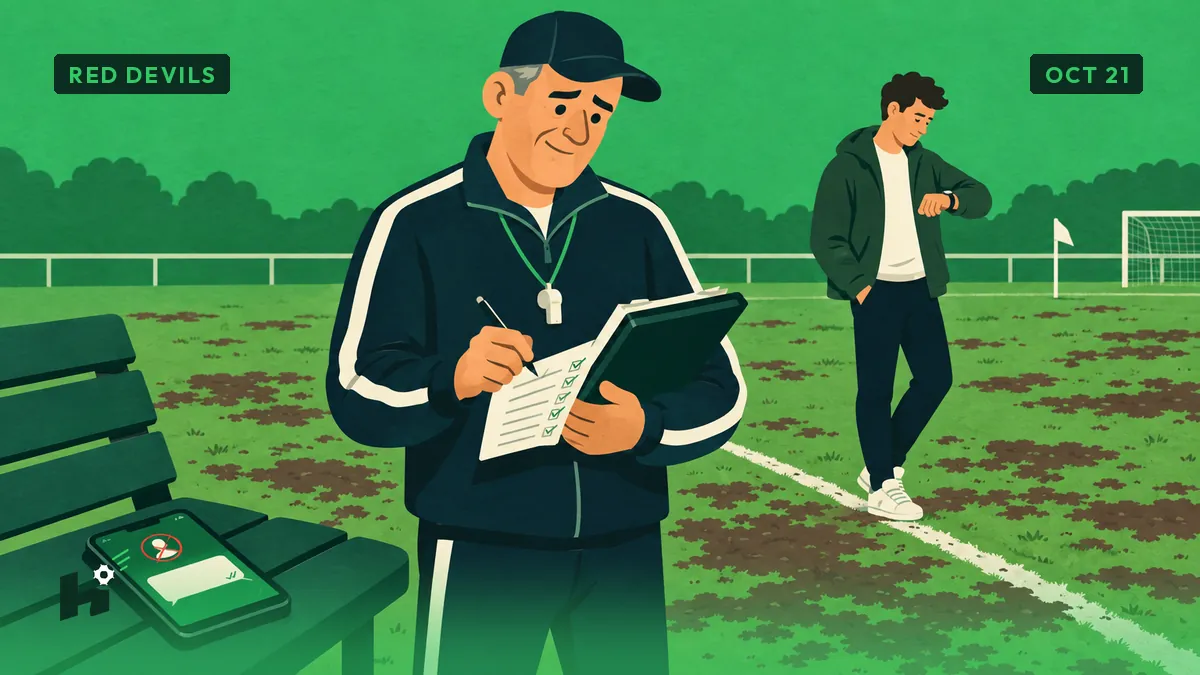
The part that interests Freddy is the logistics: four trips, four team talks, four match sheets. His club delegate, he says, would have filed the lot in one folder, ID cards and a spare biro included. And he’d have counted the shirts twice, because in P3 nobody replaces a lost bib before the winter break.
Four team talks in eleven days. Back then, a manager had time to forget his players between two games, and they had time to forget him. I’m not criticising. I’m comparing.
The campaign closes in November with a trip to Turkey and Italy at home. Four talks down, two to go.
It’s true, we checked: RTBF Sport.