
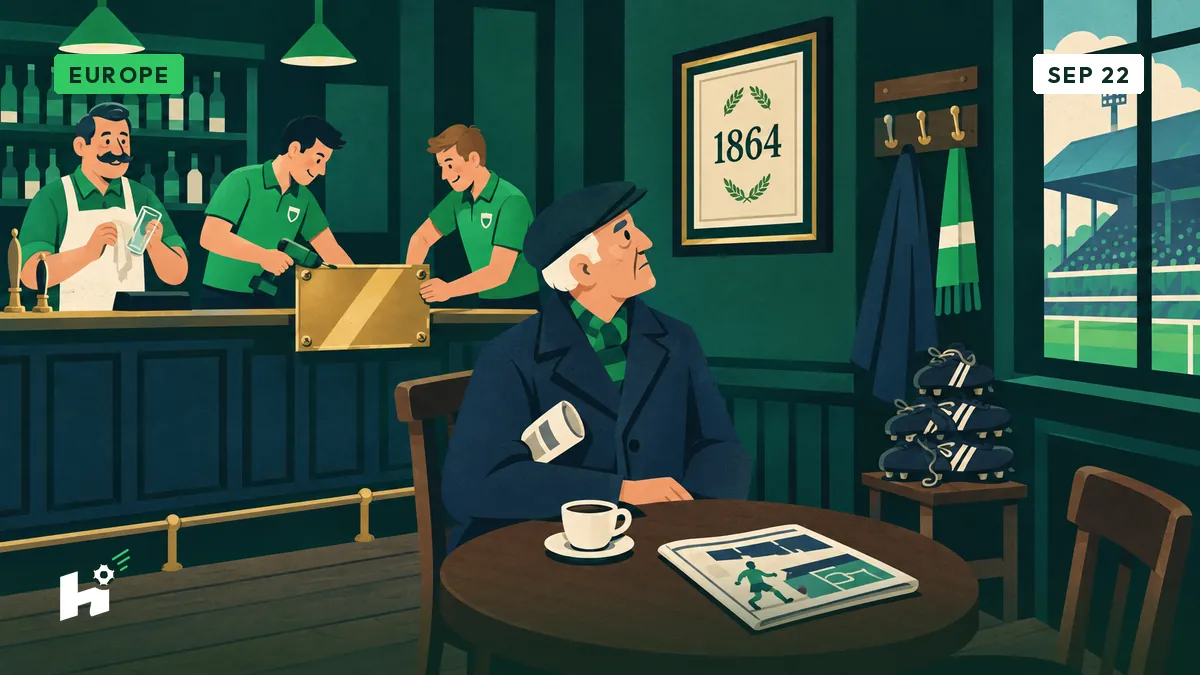
The club statement talks about preserving the history of “the historic public house that is inexorably linked to the Racecourse Ground and Wrexham AFC Football Club since its foundation in 1864”. It also says the deal “is a continuation of the strategy to protect the future of the club and its interests by ring fencing key areas related to the life of the club”.
Marcel read that sentence twice, at the friterie (chip shop), on the Monday, as usual.
A club is born in a pub in 1864. A hundred and sixty years later, its owners buy the pub. You used to walk in for a pint and walk back out. Now you walk into a group. I’m not criticising. I’m comparing. Well. It’s the times.
The landlord stays. Wayne Jones has run The Turf for twenty years and will keep running it. He told the BBC the pub “continues to be a focal point for fans on matchdays and non-matchdays”, and that the club’s history runs through it, “with the players changing in the pub before running out onto the Racecourse Ground as recently as the 1940s”.
Eric Allyn, whose family has been a minority investor in the club through Red Dragon Ventures since 2024, told the BBC: “Ever since we invested in Wrexham AFC through Red Dragon Ventures in 2024, the town, the community and the football club have become a second home. By bringing The Turf into the group, we are securing the long-term future of the pub and with it preserving its history and that of the club.”
Tactically, it changes nothing about the block. But a club that owns its pub is a club that controls its takings. At my place the clubhouse bar pays for the training bibs, not the other way round. A flat pitch away, mind you.
The Racecourse Ground hosted its first Wales match in March 1877 and is still the oldest ground in the world to stage international football. According to the club statement, the deal will allow the current fan zone and other supporter activities to be improved in the area next to The Turf, on Mold Road.
It’s true, we checked: BBC Sport.